
This might just be the ultimate comfort dish: rich, tender beef simmered slowly in beer with a medley of veggies. If you’re after something soulful and hearty, you’ll love this Beef Carbonnade with Beer and Vegetables Recipe.

Jump to:
- Why You'll Love This Recipe
- Ingredients & Why They Work
- Make It Your Way
- Step-by-Step: How I Make Beef Carbonnade with Beer and Vegetables Recipe
- Top Tip
- How to Serve Beef Carbonnade with Beer and Vegetables Recipe
- Make Ahead and Storage
- Frequently Asked Questions:
- Final Thoughts
- Beef Carbonnade with Beer and Vegetables Recipe
Why You'll Love This Recipe
I’ve made this Beef Carbonnade with Beer and Vegetables Recipe countless times, especially on chilly weekends when slow cooking is my best friend. It’s that kind of recipe where the smells fill your home with warmth, and the beef falls apart tender, soaking up all those deep, malty beer notes combined with fresh herbs and hearty veggies.
- Deep, rich flavors: The slow-braised beef absorbs the beer and herbs perfectly, making every bite saucy, savory, and satisfying.
- Perfect blend of textures: Tender meat, soft carrots and mushrooms, plus a slight smokiness from the speck—each ingredient bringing its own magic.
- Hands-off cooking: After that initial browning and adding ingredients, your oven does all the work. Great for weekend relaxing!
- Flexible and approachable: You don’t need fancy cuts or complicated steps, and substitutions are easy if needed.
Ingredients & Why They Work
All the ingredients come together to build deep aroma and mouthwatering richness. Choosing the right beef and beer is key, plus the fresh herbs and speck add complexity. Shopping tip: Look for good quality short ribs with nice marbling for melt-in-your-mouth results.

- Beef short ribs: The bone-in ribs add flavor and gelatin, giving the sauce natural thickness and richness.
- Olive oil: Used for browning the beef and sautéing the veggies to bring out their flavors.
- Plain/all purpose flour: Dusting the ribs helps create a subtle crust and thickens the sauce slightly.
- Carrot: Adds sweet notes and balances the savory intensity of the beef and beer.
- Brown onions: Their mellow sweetness enriches the overall taste; don’t rush sautéing them.
- Button mushrooms: Earthy flavor and tender texture contribute to the dish’s heartiness.
- Speck: This smoky, cured pork brings a wonderful depth, much like bacon would.
- Tomato paste: Adds umami and a slight tang to enrich the sauce.
- Fresh garlic: Brightens flavors and enhances aroma without overpowering.
- Wholegrain mustard: Offers a tangy sharpness that cuts through richness and adds complexity.
- Fresh thyme and rosemary: Those classic herb notes are essential for that aromatic layer.
- Beer: Your choice of beer affects flavor – a lager works beautifully, but darker beers add even more depth.
- Beef stock: Builds the base for the sauce and keeps the meat succulent.
- Salt & pepper: Essential for seasoning and balancing all the flavors.
Make It Your Way
This recipe is super forgiving and open to your favorite tweaks. I like to change up the herbs sometimes or swap speck for bacon, especially if I want a smokier punch. Don’t hesitate to make it your own!
- Variation: I once made this with a darker stout beer, which gave an even more robust, roasted flavor to the sauce—perfect for winter dinners.
- Vegetarian option: Try using hearty mushrooms and vegetable stock with some smoked tempeh for the same depth of flavor.
- Slow cooker adaptation: After browning, you can transfer everything to a slow cooker and cook on low for 6-8 hours.
Step-by-Step: How I Make Beef Carbonnade with Beer and Vegetables Recipe

Step 1: Prep and Brown the Beef
Start by cutting your beef short ribs into individual ribs and patting them dry—this helps with browning. Then dust the ribs lightly in flour. Heating 1 tablespoon of olive oil in a heavy flameproof casserole or Dutch oven on medium-high heat, brown the ribs in batches until they get a nice crust on all sides. Don’t rush this step; those browned bits mean serious flavor. Set the ribs aside once browned.
Step 2: Sauté the Vegetables and Speck
In the same pot, add another tablespoon of oil if needed, then toss in diced carrots, sliced onions, mushrooms, and the diced speck. Cook gently until the veggies soften and start releasing their juices—about 5-7 minutes. This step layers flavor and softens the veggies ready for the braise.
Step 3: Add Tomato Paste, Garlic & Beer
Stir in the tomato paste and crushed garlic cloves, cooking for 30 seconds to bring out their aromas. Then pour in the beer and bring everything to a gentle simmer, scraping up all those tasty browned bits stuck to the bottom—that’s pure gold for your sauce.
Step 4: Final Flavor Boost & Oven Time
Add the wholegrain mustard, fresh thyme, and rosemary, stirring to combine. Next, pour in the beef stock and nestle the ribs back into the pot along with any resting juices. Bring it all back to a simmer, then cover the pot tightly and transfer to your preheated 160°C (320°F) oven.
Braise for around 2 hours until the beef is fork-tender and falling off the bone. If it still feels tough, pop it back in for another 30 minutes. You want melt-in-your-mouth tenderness.
Once done, season with salt and pepper to taste, and get ready to plate up this glorious dish.
Top Tip
Slow cooking is all about patience and layering flavors. I learned that rushing the browning step or stirring too often can prevent that beautiful crust and caramelized flavor buildup. Here are the tips that made a difference for me:
- Thorough browning: Take your time to brown the ribs well in batches, ensuring they develop a deep crust for flavor.
- Scrape those fond bits: When you add beer and stock, don’t forget to scrape the browned bits stuck on the pot’s base—this brings richness to your sauce.
- Low and slow: Cooking at 160°C (320°F) in the oven ensures evenly tender meat without drying out.
- Adjust sauce thickness: If your sauce isn’t thick enough after cooking, remove the ribs and simmer the sauce uncovered on the stove until it reduces to your liking.
How to Serve Beef Carbonnade with Beer and Vegetables Recipe

Garnishes
I like finishing this dish with a sprinkle of fresh chopped parsley or thyme. The herby freshness cuts through all that richness, making it feel lighter on the palate and very inviting. Sometimes, a little wholegrain mustard on the side is my secret weapon.
Side Dishes
Mashed potatoes or buttery egg noodles are classic pairings that soak up the luscious sauce perfectly. Occasionally, I’ll serve it alongside crusty bread, so you can really mop up every last drop. For something lighter, steamed green beans or a simple salad compliment well.
Creative Ways to Present
For special occasions, I love serving this Beef Carbonnade with Beer and Vegetables Recipe in individual mini cast iron pots. It’s rustic and cozy, plus it keeps everything warm at the table. You can also top with a dollop of horseradish cream for a surprising zing.
Make Ahead and Storage
Storing Leftovers
Leftovers keep beautifully in an airtight container in the fridge for up to 3 days. The flavors deepen overnight, so sometimes I prefer it the next day! Just give it a gentle reheat on the stove, adding a splash of stock or water if the sauce seems too thick.
Freezing
I’ve frozen portions successfully—make sure it cools completely before transferring to freezer-safe containers. It keeps well for up to 3 months. Thaw overnight in the fridge for best results.
Reheating
Reheat gently on the stove over low heat, stirring occasionally. Avoid microwave reheating if possible, as slow warming keeps the meat tender and sauce silky. Adding a little extra stock while reheating refreshes the sauce texture.
Frequently Asked Questions:
Absolutely! While short ribs give a great balance of meat and connective tissue for tenderness and flavor, you can use chuck steak or brisket as alternatives. Just be prepared to adjust cooking time until the beef is fork-tender.
Lager is my go-to for a lighter and slightly sweet flavor, but you can use darker beers like brown ales or stouts for a richer, more roasted profile. Choose a beer you enjoy drinking, because its flavor really shines in the dish.
Yes! After browning the beef and sautéing the veggies, transfer everything to a slow cooker and cook on low for 6-8 hours or until the beef is tender. It’s an easy way to prep and come home to a ready meal.
If the sauce is a bit thin after cooking, remove the ribs and place the pot back on the stove over medium heat. Simmer uncovered, stirring occasionally, until the sauce thickens to your liking. This intensifies the flavors too.
Final Thoughts
This Beef Carbonnade with Beer and Vegetables Recipe always feels like a warm hug in a bowl. It’s the kind of meal I look forward to sharing with family and friends when I want something comforting yet impressive. Give it a try—you’ll enjoy the process and love the delicious results just as much as I do.
Print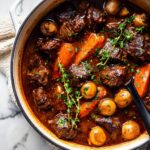
Beef Carbonnade with Beer and Vegetables Recipe
- Prep Time: 20 minutes
- Cook Time: 2 hours
- Total Time: 2 hours 20 minutes
- Yield: 4 servings 1x
- Category: Main Course
- Method: Baking
- Cuisine: Belgian
Description
Beef Carbonnade is a rich and hearty Belgian stew featuring tender beef short ribs slowly braised in beer, beef stock, and aromatic herbs. This comforting main course is enhanced with mushrooms, speck, and a flavorful blend of mustard and tomato paste, perfect for a cozy meal.
Ingredients
Beef and Seasoning
- 1.5 kg beef short ribs - trimmed
- ¼ cup plain/all purpose flour
- salt & pepper to taste
Vegetables and Aromatics
- 1 large carrot diced
- 2 brown onions sliced
- 300 g button mushrooms, whole or thickly sliced
- 150 g speck diced
- 2 fresh garlic cloves crushed
Liquids and Flavorings
- 2 tablespoon olive oil
- 2 tablespoon tomato paste
- 2 tablespoon wholegrain mustard
- 1 tablespoon fresh thyme leaves or 1 teaspoon dried
- 1 tablespoon fresh rosemary finely chopped
- 350 ml beer (lager or any beer you enjoy)
- 500 ml beef stock
Instructions
- Preheat Oven: Preheat your oven to 160 degrees Celsius (320 degrees Fahrenheit) to prepare for slow baking the stew.
- Prepare Beef: Cut the beef short ribs into individual ribs and dust them thoroughly with the flour, coating all sides evenly.
- Browning Beef: Heat 1 tablespoon of olive oil in a large flameproof casserole dish or Dutch oven over medium-high heat. Fry the ribs in batches until they are well browned on all sides, adding more oil if necessary. Remove browned ribs to a plate.
- Sauté Vegetables: In the same pot, add the diced carrot, sliced onions, mushrooms, and diced speck. Fry until the vegetables start to soften and release their aromas.
- Add Flavorings: Stir in the tomato paste and crushed garlic cloves, cooking for about 30 seconds to deepen the flavors.
- Add Beer and Herbs: Pour in the beer and bring the mixture to a gentle simmer. Add wholegrain mustard, fresh thyme leaves, and finely chopped rosemary. Stir well, scraping the bottom of the pot to lift any browned bits for added flavor.
- Add Stock and Beef: Pour in the beef stock, return the browned beef ribs along with any resting juices to the pot, and bring to a simmer again.
- Bake: Cover the pot with a lid and place it in the preheated oven. Bake for 2 hours or until the beef is tender and juicy. If the beef is not tender after 2 hours, continue baking for an additional 30 minutes.
- Season and Serve: Remove the ribs and season the stew with salt and pepper to taste. For a thicker sauce, simmer the liquid on the stovetop after removing the ribs until desired consistency is reached. Serve hot.
Notes
- Browning the ribs well is essential as the caramelized bits add deep flavor to the stew.
- The weight of ribs includes bones so expect some of the weight to be bone, not just meat.
- Bacon can be used as a substitute for speck if desired.
- Lager is suggested for beer, but feel free to use any beer that suits your taste preferences.
- If after the initial baking time beef remains tough, simply continue cooking in the oven for another 30 minutes.
- To thicken the sauce, remove the ribs and simmer the sauce on the stove until it reduces to your liking.
- Calorie counts are approximate and may vary depending on ingredients and cooking variations.
Nutrition
- Serving Size: 1 serving
- Calories: 650 kcal
- Sugar: 5 g
- Sodium: 550 mg
- Fat: 40 g
- Saturated Fat: 15 g
- Unsaturated Fat: 22 g
- Trans Fat: 0.5 g
- Carbohydrates: 15 g
- Fiber: 3 g
- Protein: 50 g
- Cholesterol: 140 mg



Leave a Reply